This tailor-made Namibia trip is the route I travelled myself: 16 days from Windhoek all the way to Victoria Falls, entirely private. You drive over the Gamsberg Pass, watch the sun rise over the dunes of Sossusvlei, look for elephants and rhinos from waterhole to waterhole in Etosha and then head for the green north: the Okavango, the rivers of the Caprivi, the elephants of Chobe in Botswana and finally Victoria Falls, from Zambia and from Zimbabwe. You choose how: behind the wheel of a 4x4 that is waiting for you, or with a private driver who knows the gravel roads.
Namibia is space. You'll drive for hours on gravel without meeting another car. It is my recommended route, and you can start on any date and change whatever you like. It's for travellers who enjoy that emptiness, don't mind a few long driving days and would rather not join a tour group.
At a glance
- Type of trip: fully arranged private tailor-made trip: you travel as a couple, family or group of friends, with no tour group and no fixed departure dates
- My recommended route: 16 days (15 nights on the ground; you fly out overnight the evening before day 1 and home overnight on day 16), adaptable from 12 to 22 days
- Transport: self-drive in a 4x4 (Windhoek to Kasane) or a private driver, your choice
- Two levels: Comfort or Premium, depending on the type of hotel or lodge
- Indicative price: from €4,960 pp excluding flight, based on 2 travellers; flight approx. €1,100–1,800 pp, not included, depending on the month
- Four travelling together: €3,840 pp instead of €4,960 (Comfort, self-drive) · travelling solo: €8,210 pp (Comfort, self-drive)
- Best months: May to October (advice only; you pick your own start date)
| Level | Self-drive (rental car) | Private driver |
|---|---|---|
| Comfort | €4,960 | €8,490 |
| Premium | €6,830 | €10,590 |
Prices per person, based on 2 travellers, excluding the international flight. All prices are estimates and become final once local partners have quoted.
Best time to travel
The dry season from May to October is the best period. Vegetation thins out and animals gather at the waterholes of Etosha and along the rivers of the Caprivi and Chobe, so you see more. The south, Windhoek and the Namib are malaria-free; from Etosha onwards, and certainly in the Caprivi, Chobe and at Victoria Falls, you travel through a malaria area. Because of an outbreak in northern Namibia, Wanda (update 22 September 2026) now also recommends prevention in June to August, so discuss prophylaxis with a travel clinic whenever you travel. Be aware that desert nights in June to August can drop close to 0 °C, so bring warm layers. October gets hot. The small lodges along the route fill up fast from July to October, and so do rental 4x4s, so deciding 9 to 12 months ahead gives you the best choice.
The route and why it runs this way
The route is not a loop: you start in Windhoek and finish at Victoria Falls. First the mountains and the desert, then the wildlife of Etosha, then the green, water-rich north. That way you never drive the same road back, and you end with the falls. Everything below is arranged for you in advance.
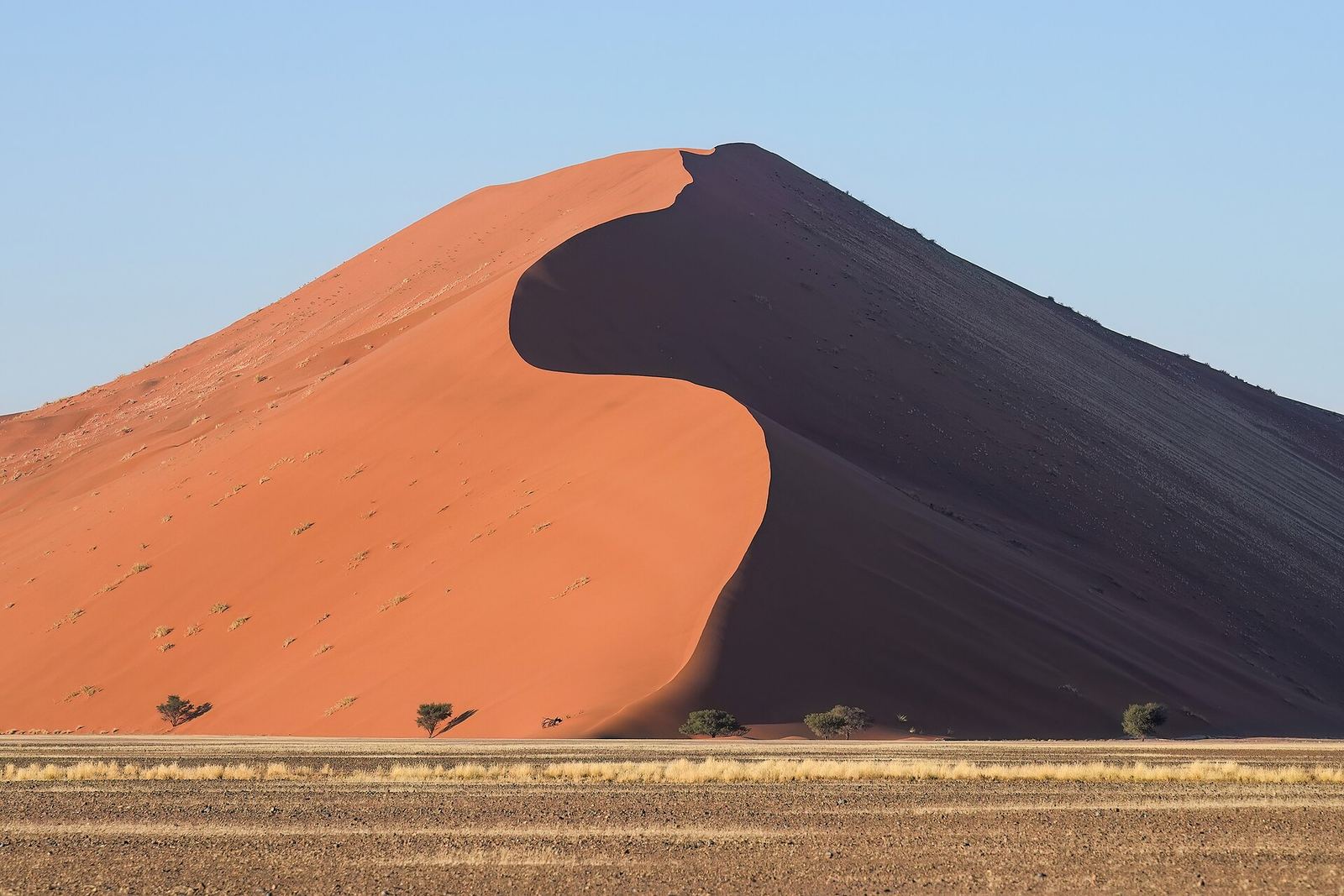
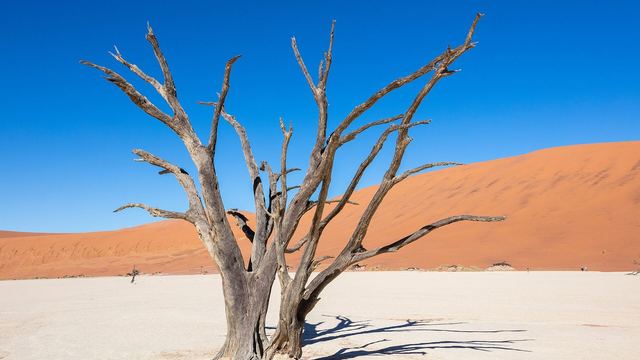
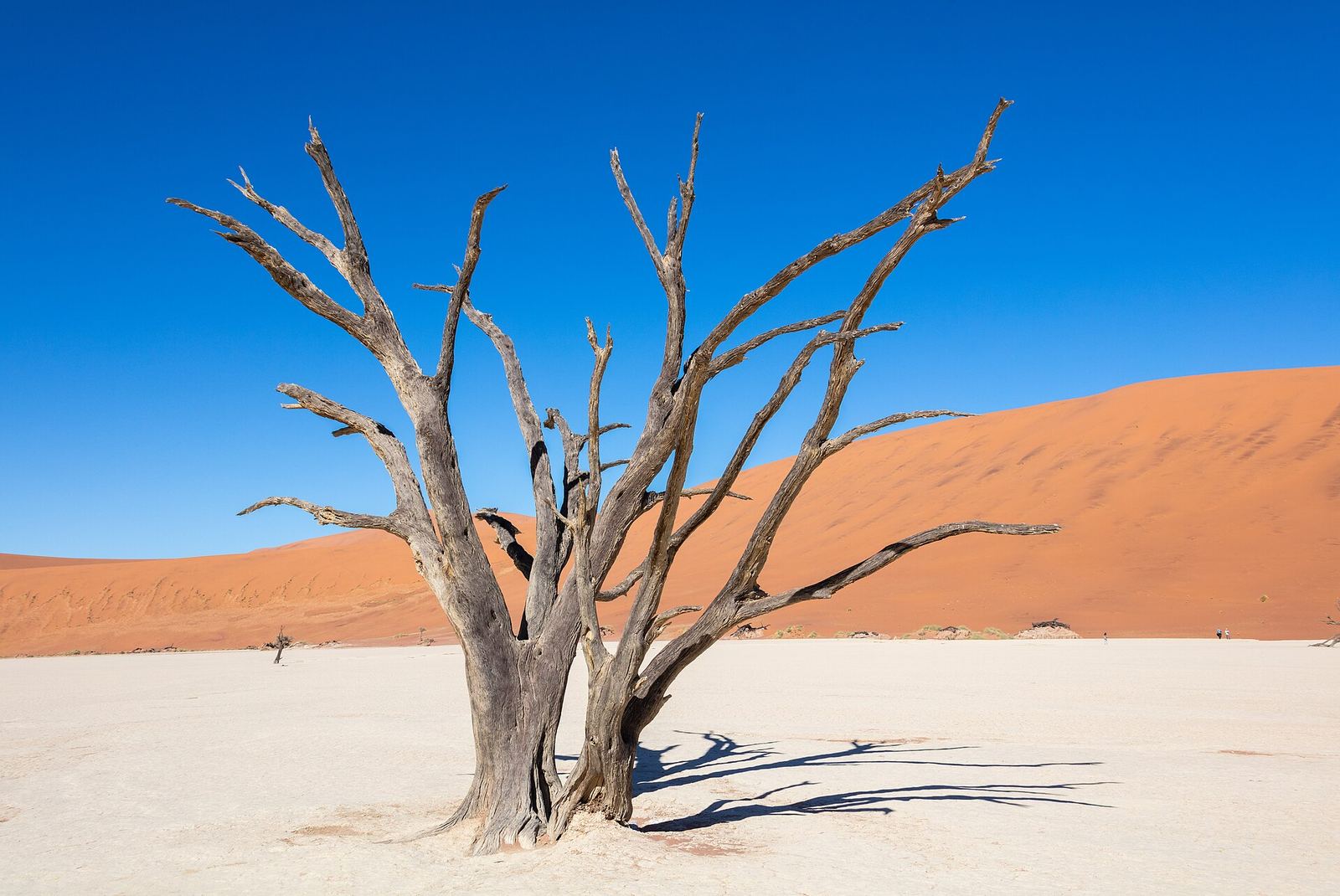
On day 1 you land in Windhoek after an overnight flight with one connection and are met at the airport; self-drivers get their 4x4 with a thorough briefing. After a night in Windhoek you drive over the Kupferberg and Gamsberg passes to a guest farm in the Khomas Hochland, with your first sundowner drive. Via Solitaire and its famous apple pie you reach Büllsport at the foot of the Naukluft mountains for a hike on the Ridge Trail or the Kudu Trail. On day 4 you are up very early for sunrise on Dune 45, the park shuttle to Sossusvlei, the walk to Deadvlei and the narrow Sesriem Canyon.
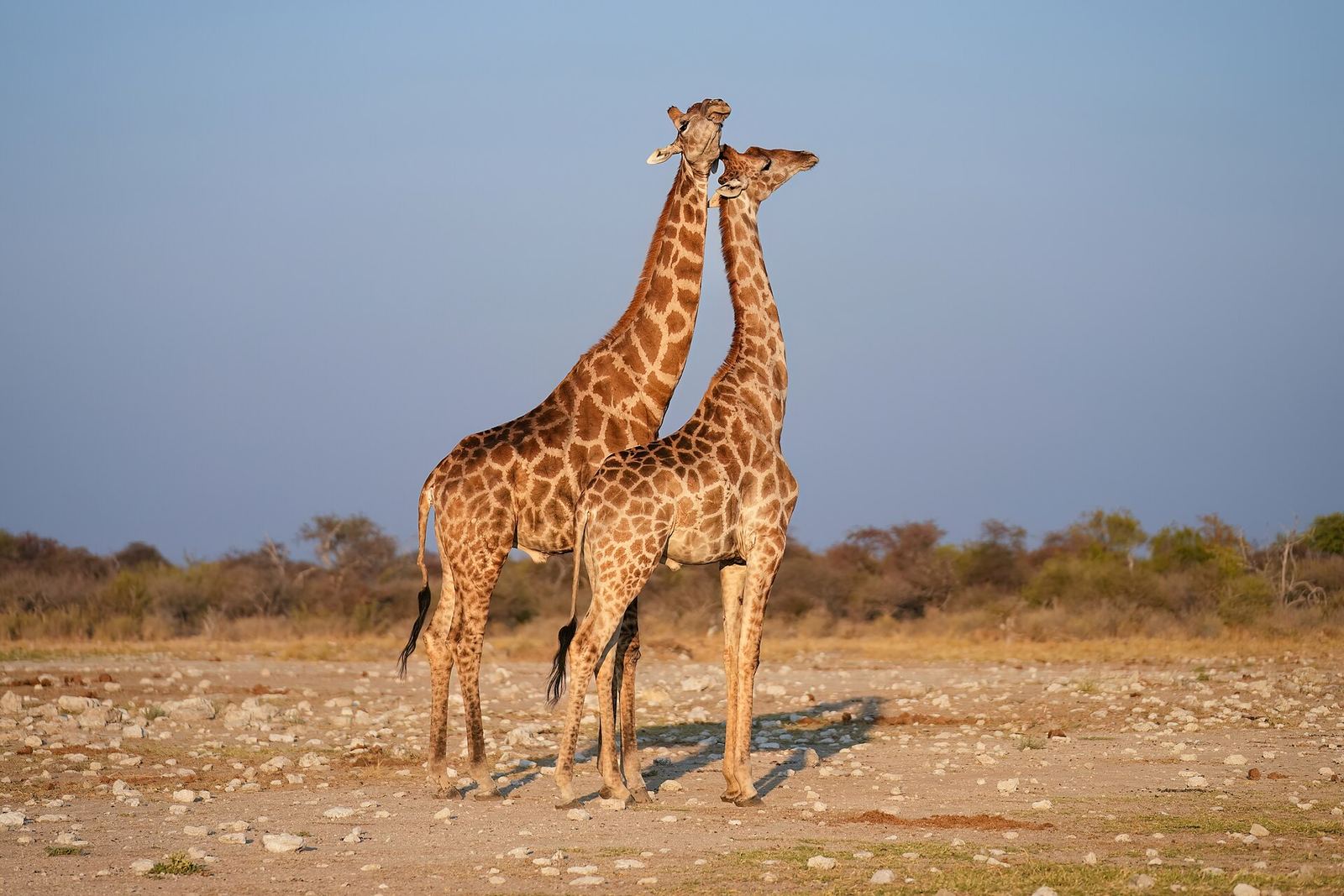
Day 5 is the longest drive (approx. 300 km of gravel) and one of the most beautiful: over the Gaub and Kuiseb passes to a lodge among the red granite mountains of the Erongo. Then on tarmac to the Cheetah Conservation Fund near Otjiwarongo and on to Etosha's Andersson Gate. On day 7 you cross Etosha from west to east, from waterhole to waterhole via Okaukuejo and Halali; on day 8 you have one more morning in eastern Etosha before Lake Otjikoto and the mining town of Tsumeb.
Then the north: the Mbunza Living Museum and a sunset on the Okavango at Rundu, Popa Falls and the Mahango loop in Bwabwata National Park, and two nights at a camp on the Kwando, with a day in the Nkasa Rupara wetland (4x4 only; Mudumu National Park after heavy rain). In Kasane in Botswana you return the 4x4, take a sunset cruise on the Chobe River and a morning game drive in Chobe National Park. A driver takes you over the Kazungula bridge to Livingstone in Zambia, where you see Victoria Falls from the Zambian side and, the next day, from Zimbabwe across the Victoria Falls Bridge. My tip: a helicopter flight over the falls (option). On day 16 you fly from Livingstone via Johannesburg on an overnight flight home.
Driving days usually take 2 to 5 hours, often on gravel; in the north you drive on tarmac. The long drives are not lost time: you drive through some of the most beautiful landscapes in Africa. Would you also like to see the coast at Swakopmund, Damaraland or the Kalahari? I am happy to add them.
See the full day-by-day itinerary
What travelling privately changes here
You stop where you like: a herd of oryx by the road, the light on the Gamsberg, an extra half hour at an Etosha waterhole with the engine off. Lodges near Sossusvlei and Etosha have limited rooms; two or four travellers are easier to place close to the gate, and you choose between Budget, Comfort and Premium.
There is no guide travelling along, and no guide by default. At the Cheetah Conservation Fund, in the Mbunza Living Museum and on the Chobe cruise and game drive you go out with the people who work there. Prefer a guide? I can add a local guide to any activity, for example a private guide riding along with you through Etosha.
You see conservation up close: the Cheetah Conservation Fund helps farmers and cheetahs live side by side, the Mbunza Living Museum is run by the community itself, and in the Caprivi you stay at a small camp that works with people from the area.
Self-drive or private driver?
The same route, two ways to travel it. You choose.
Self-drive. Namibia is Africa's self-drive country par excellence, and that is how I travelled this route myself. You pick up your 4x4 in Windhoek and return it in Kasane in Botswana. You get a vehicle with two spare wheels and zero-excess insurance, a thorough briefing and a road book with driving times, fuel stops and road conditions. Fuel is paid locally (indicative ± €420 per vehicle for the whole route). You drive on the left, at 80 km/h at most on gravel and never after dark. You need your Belgian driving licence and an international driving permit. The rental company gives you the border papers for Botswana.
Private driver. Rather not drive on gravel yourself? Then you travel from Windhoek to Kasane with one dedicated driver-guide in a 4x4. He speaks English and Afrikaans (which Flemish speakers understand well), knows the roads and the waterholes and also drives you through Etosha, Mahango and Nkasa Rupara. That way you can enjoy the landscapes to the full along the way. Fuel and your driver's accommodation are included.
At Comfort level the private-driver option costs about €3,530 per person more than self-drive (based on 2 travellers); with a driver fuel is included, when self-driving you pay fuel locally (indicative ± €420 per vehicle for the whole route). With four in one vehicle the difference per person shrinks.
Airport pickup. At Hosea Kutako airport you are met. Self-drivers are taken to the depot in Windhoek, where the 4x4 is waiting with a thorough briefing; with a private driver, your driver is in the arrivals hall himself. In Kasane you return the vehicle; then a driver takes you to Livingstone and, on the last day, to Livingstone airport.
Comfort or Premium
The route stays the same; the level decides where you sleep.
- Comfort: The guest farms and lodges where I stayed myself, with half board at the remote places (approx. €60–380 per room): a guest farm below the Gamsberg, lodges in the Naukluft, the Erongo and near Etosha, a lodge on the Okavango, a camp on the Kwando, cottages on the Chobe and a hotel on the Zambezi.
- Premium: The best address at each stop (approx. €200–640 per room, mostly on half board): a desert ranch below the Gamsberg, the Büllsport guest farm, a luxury lodge with plunge pools near Sossusvlei, luxury tents near Etosha, river lodges on the Okavango and the Kwando and a lodge on the Zambezi.
You can mix: every hotel or lodge can be swapped.
Practical tips
- Visa (Belgian passport): since 1 April 2025 Belgians need a visa for Namibia (N$1,600 pp, approx. €85, indicative price; valid 30 days). I apply for the e-visa for you in advance via the official portal, so you don't queue for a visa on arrival. Send me a scan of your passport photo page, a recent digital passport photo and your flight details. You pay the visa fee yourself. Botswana and Zambia are visa-free for Belgians. For your walk over the bridge into Zimbabwe you buy a visa at the border (US$30) or the KAZA visa (US$50) for Zambia and Zimbabwe together. Your passport must be valid for at least 6 months on arrival and have enough blank pages for four countries (allow 6).
- Meals: breakfast is included every day, and at Comfort and Premium dinner too at the remote lodges from the Gamsberg to the Caprivi, where there is no alternative. In Windhoek, Tsumeb, Kasane and Livingstone you choose where to eat: I give you my restaurant recommendations, with no obligation. Lunch is often a picnic on the way.
- Health: no mandatory vaccinations when travelling directly from Belgium. Discuss malaria prophylaxis for days 6 to 16 (Etosha, the Caprivi, Chobe and Victoria Falls) with a travel clinic or check wanda.be.
- Money: Namibian dollar, pegged 1:1 to the South African rand. In Botswana you pay in pula; in Zambia and Zimbabwe US dollars in cash are handy for the visa and taxis. Cards work at most lodges.
- Flights and time: out approx. 12 to 15 hours with one connection, for example via Frankfurt; back from Livingstone to Johannesburg (approx. 1.5 hours) and then an overnight flight to Europe. All four countries are 1 hour ahead of Belgium in winter and on the same time in summer.
Travel advice
The Belgian FPS Foreign Affairs describes Namibia as stable, but crime is rising, especially in Windhoek, with theft and aggressive robbery by day and by night. So don't walk in towns after dark, use your hotel's secure parking and never leave luggage visible in the vehicle. The gravel roads carry risks too, which is why self-drivers get a 4x4 with two spare wheels, a thorough briefing and clear rules: 80 km/h at most on gravel and never after dark. If that worries you, choose the private driver. Read the latest advice on diplomatie.belgium.be.
Frequently asked questions
Do Belgians need a visa for Namibia?
Yes, since April 2025. The e-visa costs N$1,600 pp (approx. €85, indicative price) and is not included. I apply for it for you in advance; you send me a scan of your passport, a passport photo and your flight details. For Zimbabwe you buy a visa at the border (US$30); Botswana and Zambia are visa-free.
Is Namibia cold in winter?
Days are pleasant, but desert nights in June to August can approach freezing. Bring a warm jacket.
How much driving is there?
Most travel days are 2 to 5 hours on the road, often on gravel; the longest is the day over the Gaub and Kuiseb passes. They are not lost hours: you cross the Gamsberg Pass, the Namib, Etosha and the Caprivi, some of the most beautiful landscapes in Africa, and you stop wherever you like.
Self-drive or private driver?
Namibia is Africa's classic self-drive country, and most travellers do it that way. You do drive on the left, up to 5 hours a day and often on gravel. If you enjoy driving and have two drivers, take the 4x4. If you would rather look out of the window, choose the private driver.
Is there malaria in Namibia?
Not in the south, in Windhoek or in the Namib. From Etosha onwards, and certainly in the Caprivi, Chobe and at Victoria Falls, you travel through a malaria area, and because of an outbreak Wanda (22 September 2026) now advises prevention also from June to August, so all year round. Ask a travel clinic for advice.
Plan your trip
Tell me when you would like to travel, how many days you have and which level suits you, and I will draw up the route for you. Plan a personal intake call via the quote form or WhatsApp or email [email protected]. As a tour operator we are insured against insolvency, as the law requires. Prices are indicative until your personal quote.
Sources
- https://diplomatie.belgium.be/nl/landen/namibie/reizen-naar-namibie-reisadvies/algemene-veiligheid-namibie
- https://visasnews.com/en/namibia-now-imposes-visa-requirements-on-33-nationalities/
- https://gondwana-collection.com/visa-namibia-information
- https://missionofnamibia.ch/index.php?option=com_content&view=article&id=31&Itemid=376
- https://etoshanationalpark.com.na/getting-to-etosha/health-and-safety/malaria-in-etosha/
- https://namibian.org/blog/namibia-raises-park-fees-by-80-to-100-percent
Last updated: 15 October 2026. Prices and dates are estimates and may change.