This tailor-made Senegal and Gambia trip takes you through West Africa in 16 days: privately, with your own driver, and with everything arranged in advance. You start with the direct six-hour flight from Brussels to Dakar, where your driver is waiting at the airport. You cross to Gorée Island, look for giraffes among the baobabs of Bandia, walk to the shell island of Fadiouth and glide by pirogue through the mangroves of the Sine Saloum Delta. Then it's by ferry across the Gambia River to The Gambia's markets and birding spots, and finally to the beaches of Cap Skirring, from where a short domestic flight takes you to Dakar for a last, quiet night near the airport before your flight home.
It is my recommended route and my personal favourite. You can start on any date and change whatever you like: days, order, hotels, activities. It suits travellers who prefer history, birds and daily life to resort beaches, and who would rather not join a tour group.
At a glance
- Type of trip: fully arranged private tailor-made trip: you travel as a couple, family or group of friends, with no tour group and no fixed departure dates
- My recommended route: 16 days (14 nights on land, 1 overnight flight), adaptable from 10 to 21 days
- Transport: private driver and private transfers (self-drive is not offered here)
- Three levels: Budget, Comfort or Premium, depending on the type of hotel or lodge
- Indicative price (estimate): from €2,240 pp excluding flight, based on 2 travellers, or about €2,900 pp including flight (return Brussels–Dakar estimated at €660; approx. €550–860 depending on the month); the domestic flight Cap Skirring–Dakar is included
- Four travelling together: about 15% off per person · travelling solo: supplement of about 74%
- Best months: November to April (advice only; you start whenever you like)
| Level | Self-drive (rental car) | Private driver |
|---|---|---|
| Budget | not offered | €2,240 |
| Comfort | not offered | €2,710 |
| Premium | not offered | €3,780 |
Prices per person, based on 2 travellers, excluding the international flight. All prices are indicative estimates and become final once local partners have quoted.
Best time to travel
The dry season from November to April is the window. The tracks are passable, and from November to March the Somone lagoon, the Saloum Delta and the Gambian coast are full of European migrant birds; from April it gets hot inland. From July to October the rainy season brings heat, humidity, flooded tracks and a higher malaria risk, so I advise against travelling then.
One note for February and early March 2027: Ramadan falls roughly between 8 February and 9 March, which can affect restaurant opening hours.
The route and why it runs this way
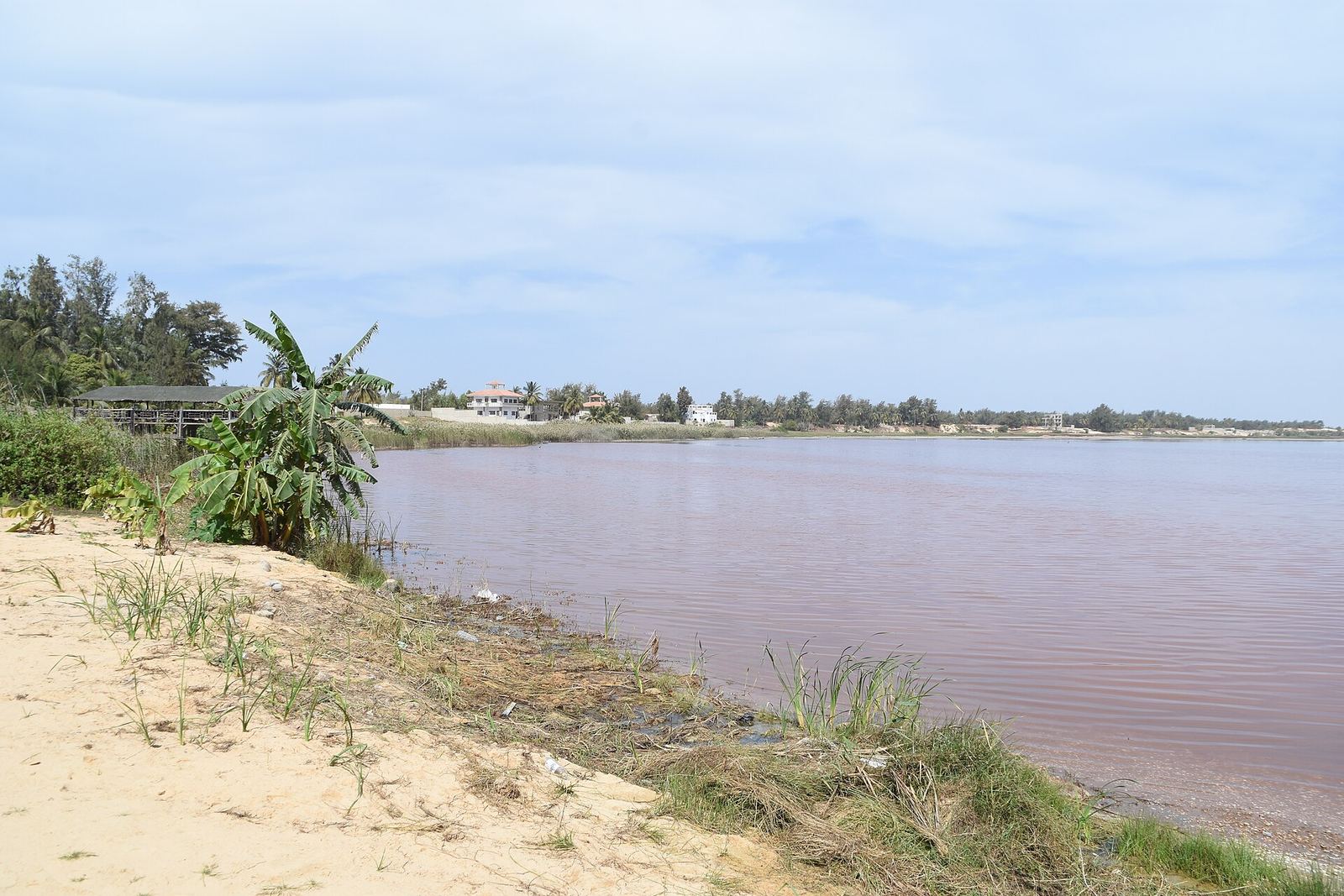
The trip runs south along the coast and ends on the beach at Cap Skirring, from where a 50-minute domestic flight takes you to Dakar, so you never double back. You spend the last night close to the airport and fly home the next evening. After three days in Dakar (Gorée, Lac Rose, Ngor Island and the Village des Arts) you drive about an hour to the Bandia reserve, a fenced private reserve where giraffes, rhinos and zebras roam among ancient baobabs (a 1.5 to 2-hour 4x4 safari with the reserve's compulsory guide; no overnight stay needed), and spend the night by the quiet Somone lagoon, which you explore by pirogue or kayak at dusk. Saint-Louis and the Lompoul dunes lie the other way, to the north; I add them on request as a two-night extension.
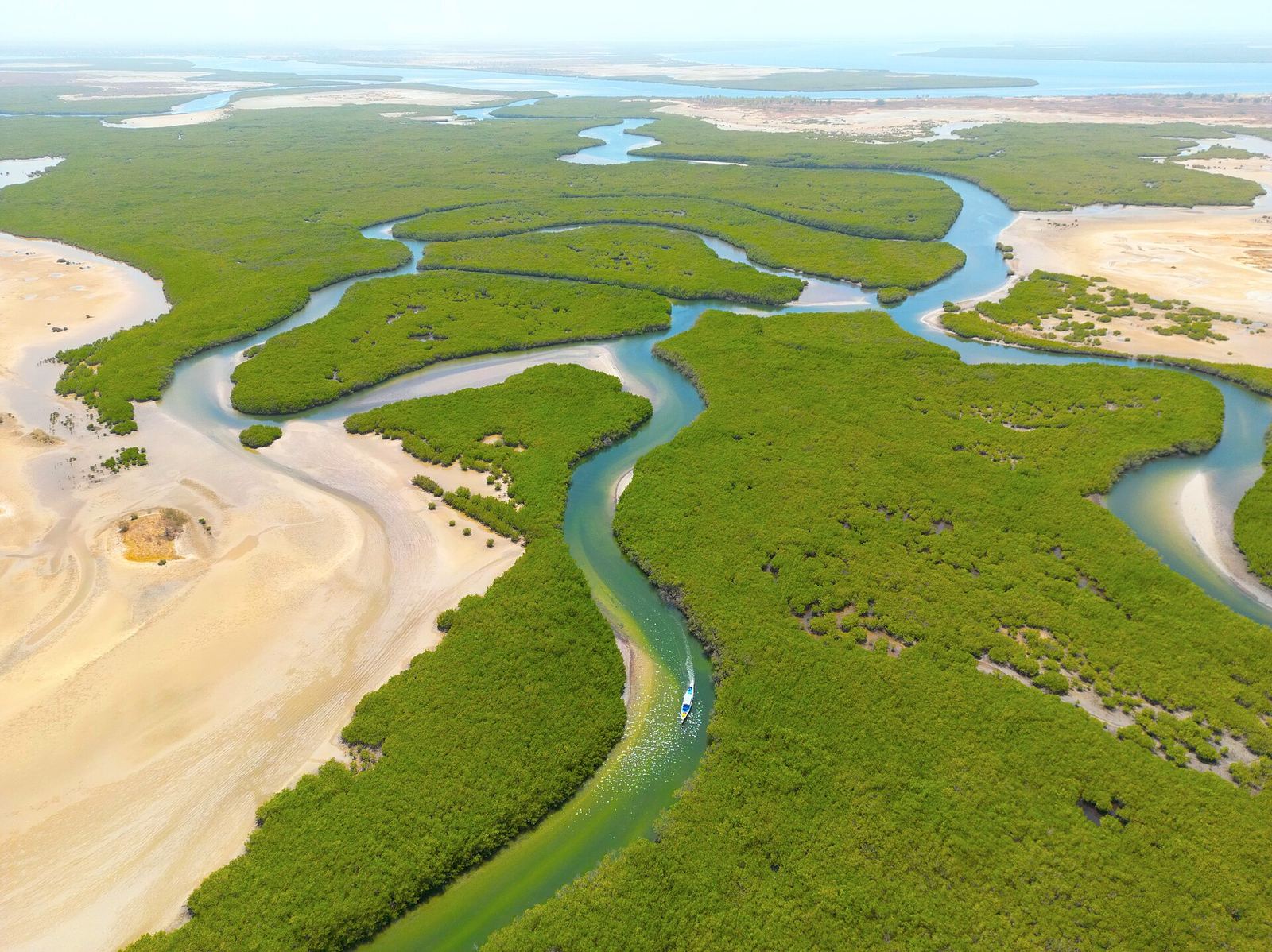
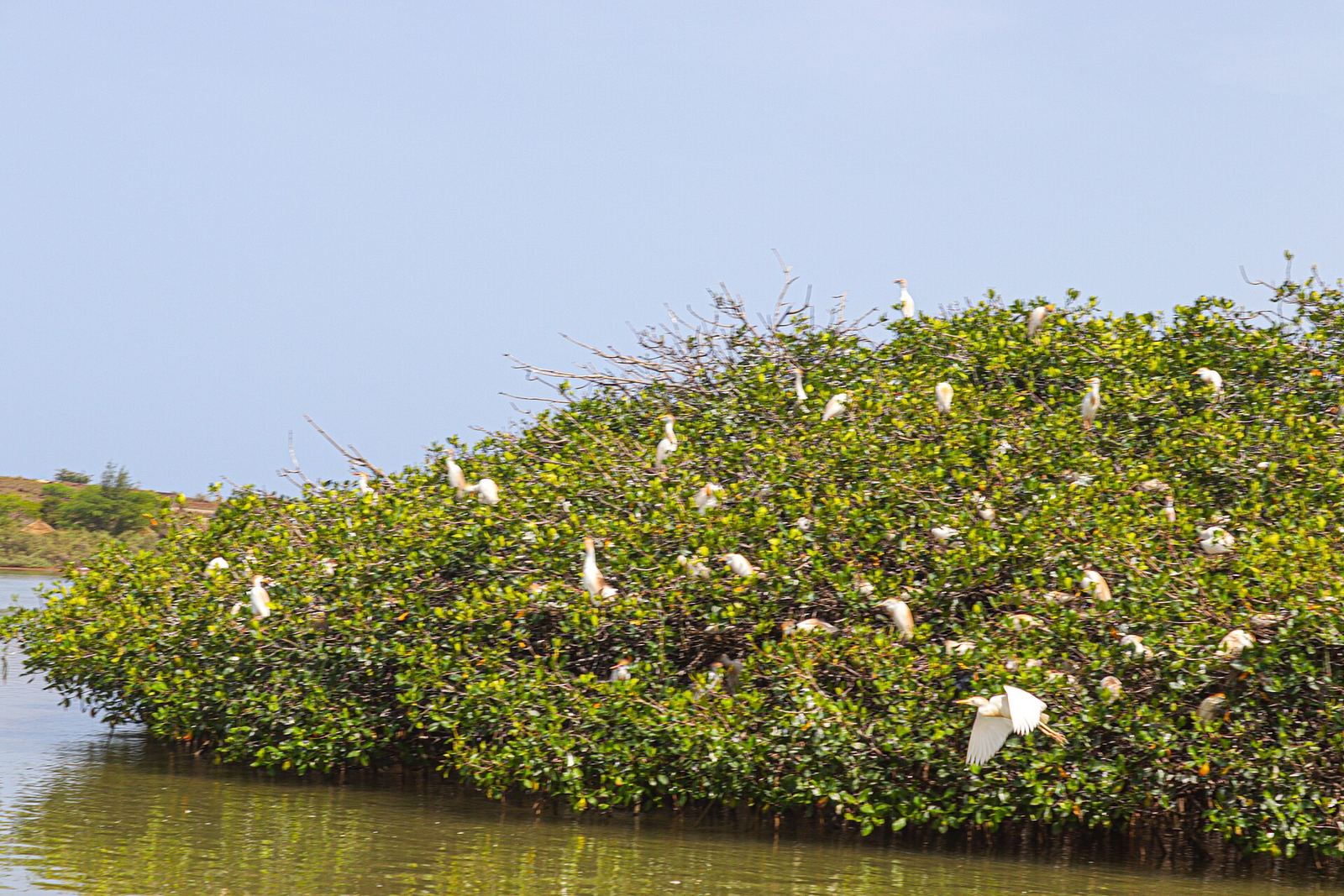
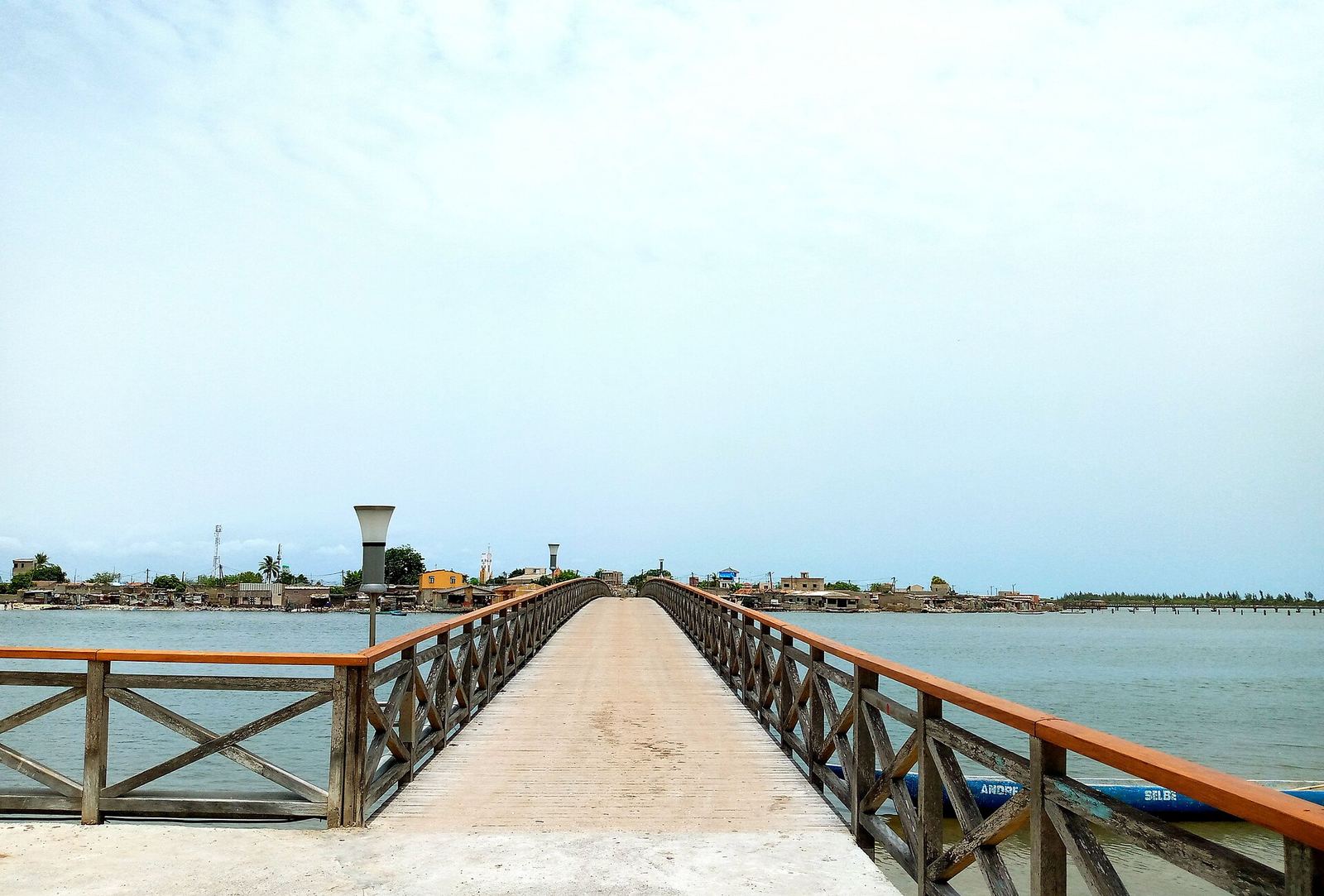
On day 5 you walk across the wooden bridge to Fadiouth, the island built on shells, on your way to the Sine Saloum Delta. Two nights there give you time for a private pirogue through the mangroves and a bike or horse-cart ride to the Palmarin salt flats. Then two nights in Toubacouta: the community-run Bamboung marine reserve, an early game drive in the Fathala reserve, home to the rare giant eland, and a sunset boat trip to the islet where thousands of herons and cormorants roost. Fathala also sells a 'lion walk' with tame lions; I deliberately don't book it.
On day 9 your driver takes you to the border at Karang and on to the ferry port of Barra, at the mouth of the Gambia River. You cross to Banjul on the ferry with your luggage (the crossing takes 30 to 45 minutes; allow 1 to 2.5 hours including the wait), and on the other side an English-speaking Gambian driver is waiting. If the ferry is not running, your driver goes round via the Senegambia Bridge (about 6 hours). Three nights on the Gambian coast leave time for Banjul, Abuko, the Kachikally crocodile pool, the Tanji fish landing, a morning of birdwatching and the Makasutu mangroves.
On day 12 you leave in the morning and cross into Casamance at Giboro–Séléti, where my trusted local driver takes over; in Casamance you travel by day only, on main roads. He drives you straight on to Cap Skirring, where you arrive before dark. Day 13 is a free day on the beach, and the morning of day 14 is free too. That afternoon your driver takes you to the small Cap Skirring airport; an Air Sénégal flight (about 50 minutes, included in the price) takes you to Dakar, where you are met and taken to your hotel close to the airport. Day 15 is yours: sleep in, enjoy the pool or a nearby beach and leave your luggage at the hotel after check-out until you go, then board the evening nonstop flight to Brussels.
See the full day-by-day itinerary
What travelling privately changes here
In the Sine Saloum Delta, to Bamboung and to the bird roost you travel in a private pirogue with a local boatman: you stop where the birds are, not where a schedule says. The eco-lodges and campements in the delta and in Casamance have only a handful of rooms, which is ideal for two or four travellers, and you choose between Budget, Comfort and Premium.
There is no guide travelling along, and you don't get one pushed on you at every stop. Prefer a guide? I can add a local guide to any activity, for example on Gorée or a birding guide in The Gambia. Only days 9 and 12 have fixed departure times, because of the ferry and the border posts. Every other day runs at your pace.
Why a private driver, and no self-drive
In many countries I let you choose between self-drive and a private driver. In Senegal and The Gambia I deliberately do not offer self-drive. Traffic is unpredictable, with overloaded trucks, livestock and unlit vehicles. You cross an international border twice, and a rental car may not enter The Gambia or be dropped in Banjul. In Casamance the Belgian travel advice is also not to travel alone.
So from day 2 to day 9 you have one French-speaking driver with an air-conditioned car; he drops you at the ferry in Barra. In The Gambia an English-speaking driver takes you from the ferry in Banjul to the Giboro border. In Casamance my trusted local driver, whom I know personally, drives you to Cap Skirring and, on day 14, to Cap Skirring airport. In Dakar a driver is waiting for the short ride to your hotel near the airport. Fuel, tolls and the ferry are included.
Practical tips
- Visa (Belgian passport): Senegal requires no visa for tourist stays up to 90 days; your passport must be valid for 6 more months. Senegal has announced a reciprocal e-visa but had not introduced it for EU citizens as of September 2026, so check before departure. The Gambia requires no visa for EU citizens for up to 90 days.
- Health: yellow fever vaccination is recommended and often checked at the border; get it at least 10 days before departure. Malaria is present, especially in The Gambia and Casamance. Discuss prophylaxis with a travel clinic or check wanda.be.
- Money: the CFA franc (fixed at 655.957 per euro) in Senegal, the dalasi in The Gambia. Euros are easy to exchange and there are ATMs in towns. Keep some small change handy for a porter at the Barra ferry.
- Flights and time: a plain return Brussels–Dakar, about 6 hours nonstop with Brussels Airlines. On the afternoon of day 14 you fly with Air Sénégal from Cap Skirring to Dakar (about 50 minutes, included), with 23 kg checked and 12 kg cabin baggage per person. You spend that night near the airport and fly home on the evening of day 15. Senegal and The Gambia are 1 hour behind Belgium in winter.
Travel advice
The Belgian FPS Foreign Affairs (update 3 April 2026) says Senegal can generally be visited safely with the usual precautions, except in border areas. Casamance has a history of armed conflict; night travel there is strongly discouraged, and the border zones with The Gambia are advised against. The route is built around that: daytime travel only, main roads, a trusted local driver in Casamance, an early start on day 12 so you always arrive before dark, official border posts only, and I keep a version of the trip without Casamance ready if the situation changes. In Dakar, street crime is rising, so don't walk after dark. The Gambia is generally safe, with extra vigilance near the southern border. Always read the latest advice on diplomatie.belgium.be before you go.
Frequently asked questions
Do I need a visa for Senegal and The Gambia?
Not at the moment with a Belgian passport, for stays up to 90 days. Senegal may introduce a reciprocal e-visa, so I check this before you leave.
Is the yellow fever vaccination mandatory?
It is recommended by ITG and often checked in practice. I advise every traveller to be vaccinated at least 10 days before departure.
How long are the drives?
You never drive more than about 3 hours a day, except on day 12: from the Gambian coast across the Giboro–Séléti border to Cap Skirring takes about 5 hours. On day 9 the ferry crossing can take half a day including the wait.
Why do I fly from Cap Skirring to Dakar?
It saves you a full day's drive back with two more border crossings. The Air Sénégal flight takes about 50 minutes and is included in the price. You then spend a relaxed last night near Dakar airport before the evening flight home; your international ticket is a plain return Brussels–Dakar. To be honest, it is an extra flight, but it replaces a long drive.
How does the Barra–Banjul ferry work?
You cross as a foot passenger with your luggage: your Senegalese driver drops you in Barra and your Gambian driver waits in Banjul. Keep your luggage with you and some small change for a porter. If the ferry is not running, your driver takes the Senegambia Bridge instead.
Is Casamance safe to visit?
You travel there in daylight only, on main roads, with my trusted local driver. If the advice tightens, I switch you to the version without Casamance.
Can I change the route or drive myself?
You can change almost everything: shorten to 10 days, stay a third night in Cap Skirring and fly to Dakar on day 15 (if the timetable allows), extend to 21 with beach days, a trip upriver or two nights in Saint-Louis and the Lompoul dunes, or swap hotels. Self-drive is the one thing I do not offer here, for the safety reasons above.
Plan your trip
Tell me when you would like to travel, how many days you have and which level suits you, and I will draw up the route for you. Plan a personal intake call via the interest list or email info@steennot-travels.be. Before we start selling trips, we take out the legally required insurance against financial insolvency. Prices remain estimates until then.
Sources
- https://diplomatie.belgium.be/nl/landen/senegal/reizen-naar-senegal-reisadvies/algemene-veiligheid-senegal
- https://diplomatie.belgium.be/nl/landen/gambia/reizen-naar-gambia-reisadvies/algemene-veiligheid-gambia
- https://diplomatie.belgium.be/nl/landen/senegal/reizen-naar-senegal-reisadvies/gezondheid-en-hygiene-senegal
- https://www.wanda.be/nl/landen/senegal
- https://www.eeas.europa.eu/senegal/travel-study_en
- https://en.wikipedia.org/wiki/Trans-Gambia_Highway
- https://info.flightmapper.net/route/Brussels_Airlines_SN_BRU_DSS
- https://senegambiatravel.com/gambia/guides/banjul-to-dakar-ferry
- https://www.routard.com/fr/guide/afrique/senegal/petite-cote/reserve-de-bandia
- https://www.routard.com/fr/guide/afrique/senegal/sine-saloum/toubacouta
Last updated: 5 October 2026. Prices and dates are indicative estimates and may change.